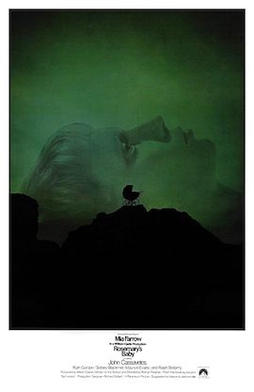
Roman Polanski, 1968 (suom. "Rosemaryn painajainen")
This film is the psychological thriller. Up to the very last moment the viewer needs to balance between if the plot events depict reality or the protagonist's delusions resulting from her weak self-esteem and natural fears during pregnancy. The film relies so heavily on plot that that part cannot really be analyzed without producing spoilers. But I must say that every viewing has revealed to me more details about the characters and events - the film opens up with multiple viewings. I find every character superbly written and every role superbly acted; the film is filled with characters that are totally bizarre yet not surreal (like in e.g. Kubrick films) but totally realistic, and the plot totally explains and justifies their bizarre nature. And the character details follow the plot in a highly subtle manner which is best visible on later viewings rather than the first.
The protagonist, by Mia Farrow, is a fragile and dreamy character easily dominated by her stereotypically egoistic actor husband, which is a fairly common and therefore realistic personality combination for a (first) couple. They both strive to live a shared dream of romance and success, but the man's frustration and disappointment about his career is constantly present in his superficial energy and prominent sarcasm (only in the earlier part of the film - this changes sharply in the middle of the film). The supporting actress playing Minnie Castevet won an Oscar and with every reason: a nosy and captivating yet intruding character with a repugnant voice and with every aspect of her having an artificial element. In every scene she wears screaming clothes that are not out of this world but just expressing unbelievably bad taste. Her husband, Roman, is extremely socially apt, pleasant and intense with "pierced ears and piercing eyes". The nicest and most lovable couple that just has something thoroughly awkward about them. And talk about their friends!
The film's dream scenes are wonderful...the best "dreams on film" I've seen. The dreams depict heavy symbolism, archetypical roles like nuns, priests and sea captains, voices of people from the past day on different characters, and faces of people from the past day in different roles. And being the dreams of the film's self-suppressing protagonist, there is an element of submission.. I especially liked when she, before the central nightmare rape of the film, in her dream says: "Please don't change the program on my account". The music is superb: there's free jazz depicting confusion (similarly to 'Repulsion' by Polanski) and very effective howling "snake-like" tunes in the nightmarish scenes that are genuinely dreadful.
The horror element in the film builds upon women's subconscious fears during pregnancy in a highly effective manner that by no means gets limited to female audience. This could not have been reached without an exceptionally great combination of story, direction and acting.

Ei kommentteja:
Lähetä kommentti